

Introduction
A controversial remark by U.S. Senator Lindsey Graham has sparked global debate after he suggested that the ongoing conflict involving Iran could be financially beneficial for the United States. According to reports, Graham described the war as “a good investment,” arguing that the U.S. could ultimately “make a ton of money” from the geopolitical reshaping of the Middle East.
While the comment reflects a strategic and economic perspective on war, it also highlights a harsh reality of global geopolitics: conflicts often create economic winners and losers. For the United States, the potential gains could come from defense exports, energy control, and geopolitical influence. For many other countries, however, the war brings economic instability, market crashes, and humanitarian suffering.

Key Data:
Oil Market Shock
- Oil prices surged over 25% since the war began.
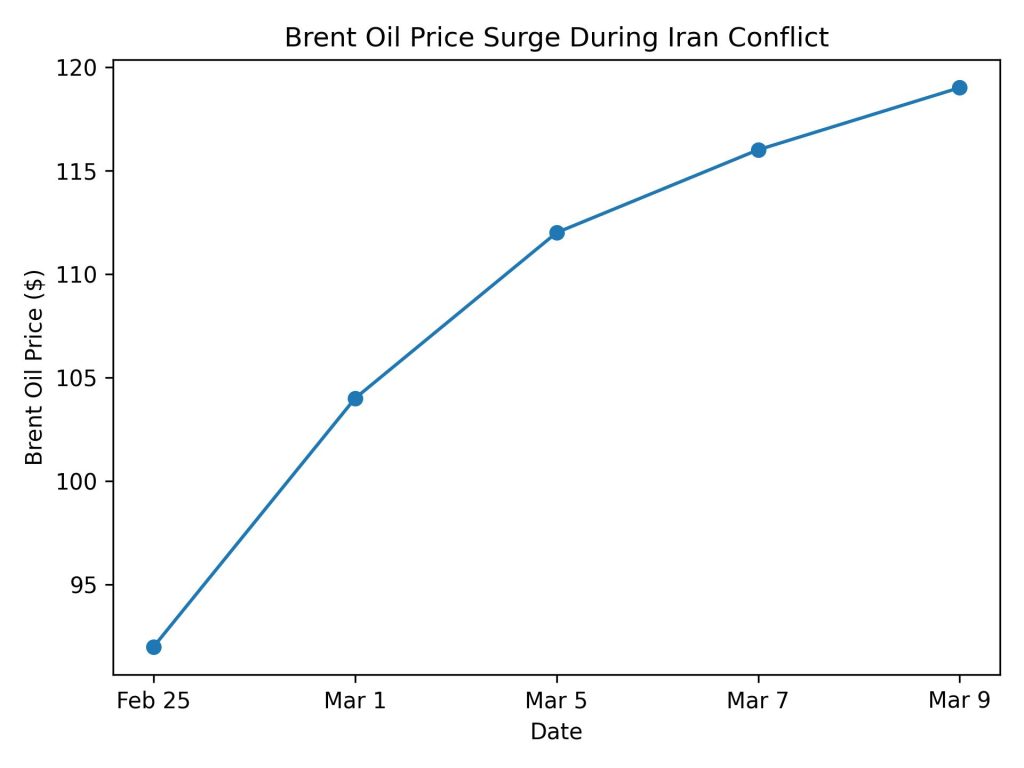
- Brent crude reached around $119.50 per barrel, the highest level since 2022.
- Nearly 20% of global oil supply passes through the Strait of Hormuz, now heavily disrupted.
Implication
Higher oil prices benefit major energy exporters like the U.S. but create inflation shocks globally.
Global Economic Impact
The war has already triggered:
- global stock market volatility
- airline cancellations and tourism disruptions
- rising commodity prices
- inflation fears worldwide
Analysts warn the conflict could push the world toward economic slowdown or recession if energy supply disruptions continue.
India Market Impact
Indian markets reacted immediately to rising oil prices.
- Brent crude spike caused sharp losses in Indian oil companies.
- The Nifty Oil & Gas index fell 2.7% in a single session.
India imports over 80% of its crude oil, making it highly vulnerable to energy shocks.
Pakistan Market Crash
Pakistan Stock Exchange experienced:
- 9.57% single-day decline
- Trading halt triggered due to panic selling.
This reflects investor fear across emerging markets.
U.S. Defense Industry Gains
War typically boosts defense contractors.
Top global arms manufacturers include:
| Company | Arms Revenue |
|---|---|
| Lockheed Martin | $64.6B |
| RTX (Raytheon) | $43.6B |
| Northrop Grumman | $37.8B |
| Boeing Defense | $30.5B |
These companies dominate global weapons production and benefit from increased military spending during conflicts.
Major buyers:
- Israel
- Ukraine
- Saudi Arabia
- UAE
- NATO countries
1. The Arms Economy: War as a Catalyst for U.S. Defense Sales
One of the most direct financial benefits for the United States in any major geopolitical conflict is arms sales.
The United States is already the largest arms exporter in the world, supplying advanced military systems to allies across Europe, the Middle East, and Asia. When regional tensions escalate, demand for American weapons typically surges.
Major Buyers During Conflict
Countries likely to increase military purchases include:
- Israel – requiring advanced missile defense systems, fighter jets, and precision weapons.
- Ukraine – continuing its war effort against Russia and seeking more U.S. military support.
- Gulf states such as Saudi Arabia, UAE, and Qatar – strengthening defenses against Iranian retaliation.
- NATO allies – expanding defense spending due to rising global instability.
During wartime, the demand for weapons such as:
- missiles and missile defense systems
- drones and surveillance technology
- fighter jets and naval systems
- artillery and ammunition
can generate tens of billions of dollars in contracts for American defense contractors like Lockheed Martin, Raytheon, and Northrop Grumman.
In geopolitical terms, war often becomes a massive stimulus program for the military-industrial complex.
2. Oil and Energy Control: The Strategic Prize
Another potential financial gain lies in energy geopolitics.
The Middle East contains roughly half of the world’s proven oil reserves, and Iran itself holds some of the largest reserves globally. Control or influence over oil supply routes can shape global energy markets.
Senator Graham reportedly suggested that weakening regimes like Iran or Venezuela could reshape the global oil market in ways beneficial to the United States.
Why Oil Matters
If Iran’s oil exports are disrupted:
- Global oil prices surge
- U.S. energy companies increase production
- American LNG and oil exports become more valuable
This has several consequences:
- U.S. shale producers earn higher profits.
- Europe and Asia become more dependent on American energy supplies.
- Strategic control over shipping lanes such as the Strait of Hormuz becomes economically significant.
In simple terms, energy scarcity during conflict can translate into energy profits for major exporters like the United States.
3. The Dollar Advantage in Times of Crisis
Another hidden economic advantage of global conflict is the strengthening of the U.S. dollar.
When global uncertainty rises, investors typically move their money into safe-haven assets, especially:
- U.S. Treasury bonds
- U.S. dollars
- American financial markets
This capital inflow helps the United States:
- finance government spending more easily
- maintain lower borrowing costs
- strengthen the global dominance of the dollar
In contrast, many emerging markets suffer severe currency depreciation during geopolitical crises.
4. The Economic Shock to Other Countries
While the U.S. may see strategic benefits, the economic shockwaves across the world are severe.
India: Massive Market Losses
Global tensions triggered sharp declines in Indian markets.
On March 9, Indian stock markets plunged as rising oil prices and geopolitical uncertainty shook investor confidence. The Sensex and Nifty dropped sharply, wiping out over ₹12.39 lakh crore in market value within minutes of trading.
Earlier, nearly ₹9.7 lakh crore in investor wealth disappeared in two trading sessions as the rupee weakened and global investors fled riskier markets.
For India—one of the world’s largest oil importers—the biggest risk is surging energy prices, which could trigger inflation and slow economic growth.
Pakistan: Stock Market Collapse
Pakistan’s financial markets also suffered dramatic consequences.
The Pakistan Stock Exchange recorded one of its worst crashes, with the KSE-30 index plunging nearly 9.6% in a single day, triggering a temporary trading halt.
Such declines reflect investor panic in economies already facing:
- high inflation
- foreign debt pressure
- political instability
For fragile economies, geopolitical conflict can quickly transform into financial crisis.
5. Oil Price Shock and Global Inflation
Another major consequence of the Iran conflict is the spike in energy prices.
Oil prices reportedly surged around 26% amid escalating Middle East tensions, pushing crude above $100 per barrel.
This creates global economic ripple effects:
- higher transportation costs
- rising food prices
- inflation across developing economies
- pressure on central banks to raise interest rates
Countries dependent on imported energy—such as India, Bangladesh, Pakistan, and many European states—face severe economic pressure when oil prices surge.
6. Humanitarian and Social Costs
While governments debate strategic gains, the real cost of war is borne by ordinary people.
Major consequences include:
- civilian casualties
- refugee crises
- destroyed infrastructure
- disrupted global supply chains
For many countries, the war represents economic pain rather than strategic opportunity.
Developing economies often face:
- rising inflation
- falling stock markets
- currency depreciation
- reduced foreign investment
Conclusion: Profit for Some, Pain for Many
The Iran conflict illustrates a stark reality of global geopolitics: wars redistribute wealth and power.
For the United States, potential benefits include:
- increased arms exports
- higher energy revenues
- stronger geopolitical influence
- safe-haven capital inflows
But for many other countries—especially developing economies—the consequences are severe:
- market crashes
- currency depreciation
- rising inflation
- economic instability
Ultimately, while some nations may gain strategic or economic advantages, the broader global cost of war is enormous. As history repeatedly shows, conflicts rarely produce universal winners—only shifting balances of power and widespread human suffering.
Tables and Charts:
Global Oil Price Surge After Iran Conflict
| Date | Brent Oil Price |
|---|---|
| Feb 25 | $92 |
| Mar 1 | $104 |
| Mar 5 | $112 |
| Mar 9 | $119 |
War Economics: Winners vs Losers
Winners
| Sector | Why They Gain |
|---|---|
| U.S. Defense Companies | Massive weapons demand |
| Oil Exporters | Higher oil prices |
| U.S. Dollar | Global safe-haven currency |
| Energy Companies | Increased profits |
Losers
| Sector | Impact |
|---|---|
| Emerging Markets | Capital outflow |
| Oil Importing Countries | Inflation shock |
| Airlines & Logistics | Higher fuel costs |
| Consumers | Rising prices |
Economic Transmission
WAR → OIL SUPPLY SHOCK
↓
OIL PRICE SURGE
↓
GLOBAL INFLATION
↓
STOCK MARKET VOLATILITY
Global Market Reaction to Iran War
| Market | Loss |
|---|---|
| Pakistan Stock Exchange | -9.6% |
| India Market Wealth | ₹30 Lakh Crore wiped |
| Asian Markets | -3% to -5% |
| Airline Stocks | -7% |
How the U.S. Could Profit from War
| Channel | Economic Effect |
|---|---|
| Arms Sales | $100B+ defense contracts |
| Oil Exports | Higher energy revenue |
| Dollar Strength | Capital inflow |
| Military Spending | Defense industry boom |
Written By-Md Kollol Hossain, CEO, CapitalinsightBD