

The Buy–Hold–Sell strategy is a proven stock investing approach for Dhaka Stock Exchange (DSE), S&P 500, and global markets, helping investors maximize long-term returns by buying undervalued stocks, holding for value appreciation, and selling strategically at target prices. This practical, data-driven investment method emphasizes selecting companies with consistent EPS growth, stable dividends, positive interim performance, and reasonable valuations, while leveraging insights from 52-week price ranges, dividend cycles, and sector growth potential. By combining disciplined timing, fundamental analysis, and risk management, the Buy–Hold–Sell strategy enables investors and traders to achieve higher annualized returns, outperform fixed deposits, and grow wealth steadily across emerging and developed markets.
JAMUNAOIL শেয়ার কি এখন কেনার সময়? | Buy, Hold & Sell Strategy ও সম্পূর্ণ Stock Analysis বাংলায়
যমুনা অয়েল (JAMUNAOIL) শেয়ারে এখন Buy, Hold নাকি Sell—কোন কৌশলটি বেশি যুক্তিযুক্ত? 📈 এই প্রশ্নের উত্তর পেতে শুধু বর্তমান শেয়ারদর দেখলেই হবে না; কোম্পানির EPS, Dividend, NAV, P/E Ratio, Interim Financial Performance এবং শেয়ারের দীর্ঘমেয়াদি Price Trend একসঙ্গে বিশ্লেষণ করা প্রয়োজন।
এই ভিডিওতে JAMUNAOIL-এর গত কয়েক বছরের আর্থিক পারফরম্যান্স থেকে শুরু করে ২০২৫–২০২৬ সালের EPS Growth, Dividend Performance এবং বছরের বিভিন্ন সময়ে শেয়ারের দামের ওঠানামা বিশ্লেষণ করা হয়েছে। বিশেষভাবে দেখানো হয়েছে Seasonal Buying & Selling Trend, কোন সময়ে শেয়ারের মূল্য তুলনামূলকভাবে আকর্ষণীয় ছিল এবং Stock Return বনাম Bank FDR Return তুলনা করে অতিরিক্ত রিটার্নের সম্ভাবনা কীভাবে মূল্যায়ন করা যায়।
👉 JAMUNAOIL শেয়ারের এই ডেটাভিত্তিক বিশ্লেষণ ও Buy-Hold-Sell Strategy জানতে নিচের Play বাটনে ক্লিক করে সম্পূর্ণ ভিডিওটি দেখুন। শেয়ারবাজারে কোনো মুনাফা নিশ্চিত নয়—তাই বিশ্লেষণটি শিক্ষামূলক উদ্দেশ্যে দেখুন এবং বিনিয়োগের আগে নিজস্ব গবেষণা ও ঝুঁকি মূল্যায়ন করুন।
A Simple, Practical Approach to Stock Investing
Whether you invest in the Dhaka Stock Exchange (DSE) or the S&P 500, this timeless strategy applies universally. The Buy–Hold–Sell approach helps investors grow wealth steadily by identifying undervalued stocks, holding through value appreciation, and selling when the target price is achieved.
Why invest in the stock market?
A stock represents ownership in a company. As a shareholder, you benefit from dividends and capital gains when the company performs well. While risk-free instruments such as treasury bills or fixed deposits yield around 5–6% annually, equities can generate higher long-term returns in both emerging and developed markets.
How to choose the right company for buying
- Consistent EPS growth
- Stable dividend history
- Positive interim performance
- Sector with growth potential
- Reasonable valuation (P/E ratio)
When to buy and sell
Smart investing begins with informed decisions, and one golden rule is: “You have to win during purchase.” Buying stocks at lower prices not only increases your potential for profit but also provides a cushion to absorb losses during downward market trends.
One effective strategy is to identify stocks trading near the lower boundary of their 52 Weeks Moving Range. While stock prices in the lower range may continue to fluctuate, this serves as a great starting point for identifying potential opportunities for further analysis.
Buy during temporary price dips—often after dividend entitlement periods—and sell when market optimism returns before the next announcement cycle. This logic applies to both DSE and U.S. markets alike.
To see the ranking-based on price close to 52week’s low, visit here.
Case Study: Jamuna Oil Company Ltd (JAMUNAOIL)
📊 Past Performance of Jamuna Oil Company
| Year | EPS | Cash Dividend | Stock Dividend | NAV | P/E Ratio | Declaration Date | Sector |
|---|---|---|---|---|---|---|---|
| 2021 | 18.24 | 120% | 0% | 180.84 | 8.90 | Not Available | Fuel & Power |
| 2022 | 16.87 | 120% | 0% | 189.00 | 10.50 | Not Available | Fuel & Power |
| 2023 | 30.87 | 130% | 0% | 205.49 | 5.83 | 13-11-2023 | Fuel & Power |
| 2024 | 40.00 | 150% | 0% | 228.61 | 4.37 | 02-12-2024 | Fuel & Power |
| 2025 | 58.70 | 180% | 0% | 274.03 | 3.11 | 13-11-2025 | Fuel & Power |
📈 Interim Financial Performance (2025-2026) of Jamuna Oil
| Period | EPS |
|---|---|
| 📊 1st Quarter Q1 | 13.70 BDT ▲ 12.5% |
| 📅 Half-Yearly (Cumulative) H1 | 19.63 BDT ▲ 43.3% |
| 📆 Nine-Month (Cumulative) 9M | 26.57 BDT ▲ 93.9% |
📌 Performance Highlights: EPS has shown consistent growth from 13.70 in Q1 to 26.57 in the nine-month period, representing a 93.9% increase.
📈 Performance Snapshot of Jamuna Oil
| Year | Avg Buy Price (Jan) | Avg Sell Price (Aug) | Gain | Return (%) | Holding (Days) | Annualized Return (%) | Avg FDR Rate (%) | Excess Return (%) |
|---|---|---|---|---|---|---|---|---|
| 2023 | 167.42 | 177.92 | +10.50 | 6.27% | 210 | 10.90% | 4.50% | 6.40% |
| 2024 | 170.37 | 189.16 | +18.79 | 11.03% | 210 | 19.17% | 10.00% | 9.17% |
| 2025 | 172.33 | 190.06 | +17.73 | 10.29% | 210 | 17.88% | 6.50% | 11.38% |
| 2026 | 170.23 | 183.43 | +13.20 | 7.75% | 210 | 13.47% | 8.50% | 4.97% |
📉 Yearly Average Low and High Close Price Summary of Jamuna Oil
| 📊 Low Price Summary | 📈 High Price Summary | 📊 Spread | |||||
|---|---|---|---|---|---|---|---|
| Year | Month | Close Price | Avg Value | Month | Close Price | Avg Value | Spread |
| 2022 | November | 169.00 | 168.03 | December | 167.30 | 171.32 | +3.29 |
| 2023 | January | 170.00 | 167.42 | April | 182.90 | 179.93 | +12.51 |
| 2024 | January | 169.90 | 170.37 | August | 194.30 | 189.16 | +18.79 |
| 2025 | May | 171.80 | 172.09 | August | 191.10 | 190.06 | +17.97 |
| 2026 | May | 168.50 | 167.72 | July | 182.40 | 183.43 | +15.71 |

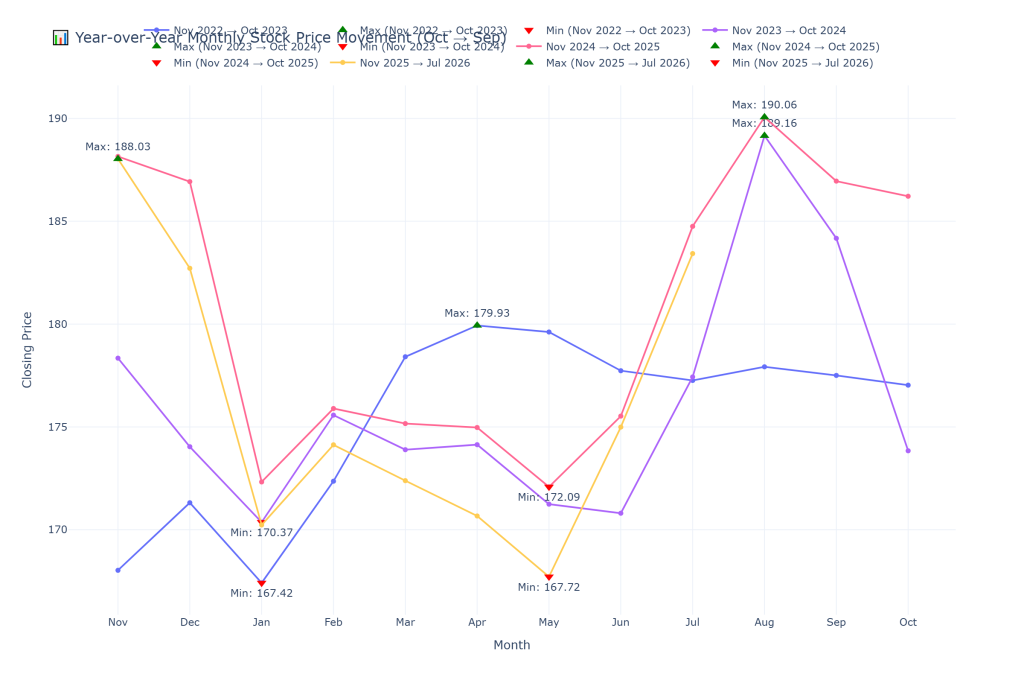
Insight: Following a buy in January and sell in August historically produced 6–11% higher annualized returns than FDRs — demonstrating that this simple timing-based method works across markets.
Conclusion
The Buy–Hold–Sell strategy is simple, disciplined, and universally effective. Whether you invest in Bangladesh’s DSE or the U.S. S&P 500, the same principles apply: buy undervalued quality stocks, hold patiently, and sell strategically. It’s a data-driven, emotion-free path to consistent returns.
Remember:
📈 Buy wisely, hold patiently, and sell strategically.
© Capital Insight BD · Educational content only · Not financial advice.
CapitalInsightBD does not provide personalized investment advice, portfolio management services, or fiduciary financial guidance.